

102 543 1
Topics covered
| July 13, 2017 – 00:15
On World Music Day, we remember the Barranquilla bands that have made a mark on different generations.
Today is World Rock Day, a genre that encompasses diverse musical rhythms—including blues, country, and jazz—and has marked a milestone in human history. Beyond being divided into soft and heavy styles, and having electric guitar, bass, drums, and keyboard as its main instruments, rock is a movement that, since its creation in the 1950s, continues to define generations.
In Barranquilla, according to music researchers and music lovers who witnessed the rise of local rock bands, the pioneers of “rebellious” music that broke the mold of “socially accepted” music were born in the late 1960s.
According to Pepe Enciso, host of the program Rock Total on Uninorte FM Estéreo and one of the first radio programmers in the city, the first rock band in Barranquilla was called Tornados, led by Richard Bruno. “I remember that in the late 1960s, around 1968, this whole musical revolution called rock began. Tornados was followed by other bands like Los Pebbles, with Fito Villarreal, and other bands that emerged in 1969, like Los Colores del Tiempo, by the Visbal brothers,” he recalls.
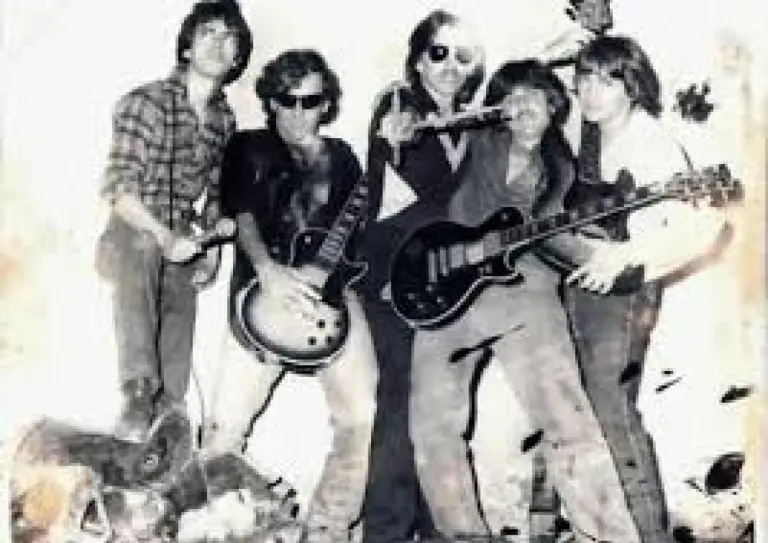
The Colors of Time. Taken from the Internet.
Miguel Ángel Reales, a self-described “hardcore music lover and rock and roll fan,” agrees. “In the 60s, when we were in the midst of the global hippie movement, rock bands like Tornados began to form in the city. They released a song called Breakfast Surf . It was the first band. There was also a band called Hora Cero, with a style more similar to The Beatles,” he notes.
“The Visbal brothers were, without a doubt, the leading figures of rock music in the city during the 1970s. Carlos, Jaime, Pedro, and Ricardo, along with Gonzalo Malabet and Jaime Jiménez, formed the band Los Colores del Tiempo,” Reales recalls.
Like Los Colores del Tiempo, Enciso emphasizes that there were two other bands, along with the Visbal brothers’ band, that made history during that era in Barranquilla. “They were the three most representative bands in Barranquilla. Along with them were the Daccarett Blues Band, which belonged to the Daccarett brothers, and Concha de Coco, with Eduardo Jalube, Darío Jaramillo, and Juan Carlos Toja.”
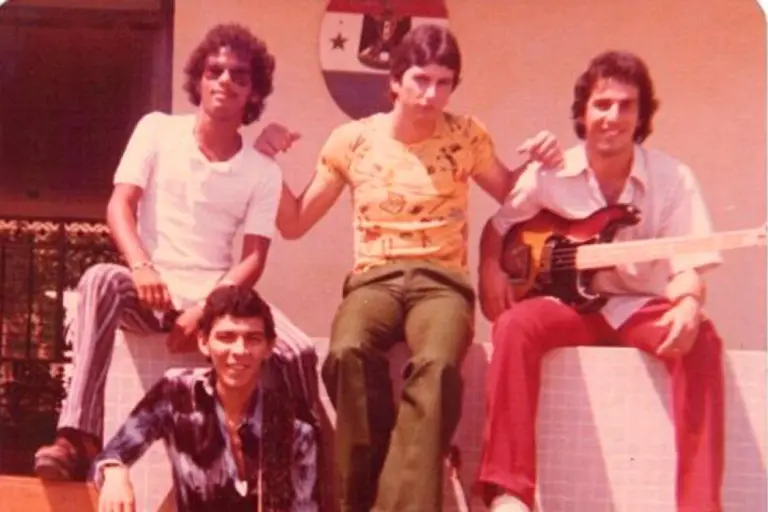
Daccarett blues band. Internet outlet.
These Barranquilla musicians shaped an entire generation. “They were the pioneers and they deserve their due. In Barranquilla, before the rock and roll craze arrived, we listened to The Beatles or the Rolling Stones. We lived in a society that was accustomed—musically speaking—to boleros or other clean genres, but this rather rebellious music arrived and opened the door to a different kind of music,” says Enciso.
She also says, laughing, that “long-haired guys weren’t accepted by the girls’ parents. They weren’t allowed to go out with us, but they managed to do it.”
Around the 1980s, there was a “very important” group called Sangre helado en un tubo de prueba, led by the Torres Angarita brothers. “They were pioneers in recording their own songs,” says Reales.
Toward the end of the 1980s and beginning of the 1990s, other groups emerged that continued their commitment to rock and roll. Bands like K-dillo, with their popular song “Luna caribeña ” (Caribbean Moon); Memo Orozco’s “Burbuja de Acero” (Steel Burbuja); Nicolás Tovar’s “Marcapasos” (Pasasos); and Bite, with their song “Thongs on the Beach,” captivated a generation that still remembers them with nostalgia today.
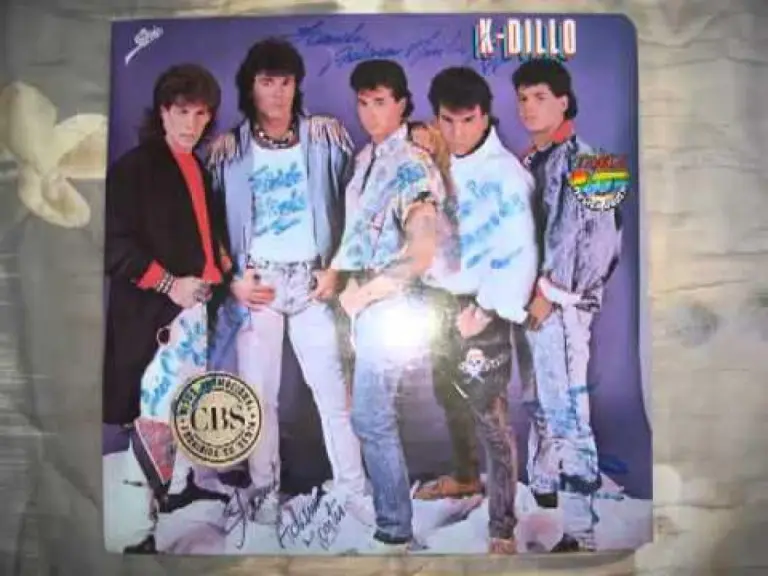
K-dillo. Taken from the internet.
Alfredo Sabbagh, a television producer and social communicator with postgraduate studies in cultural management and a master’s degree in documentary film, fondly recalls being the producer of Tangas en la playa in 1991.
“That video was my graduation project from the Universidad del Norte. It was a band that made a name for our generation,” he says.
Names like Axis, Black Angel, and Carbono 14 also graced the stages of open-air event venues like Washington Park, the Coliseo Theater, and the Lido Theater, and were heavily featured on radio stations like Radioactiva and Universal Stereo.
These bands paved the way for younger generations to follow that path. Joyce Lozano, vocalist of Oro Estéreo, comments that “the great rock bands of the time set a precedent. I remember that with Radioactiva we did events called Cocacola Rock y Pop and Costeñitas Rock y Pop. From there, the group Kaos emerged, which later became Los de Adentro. Rock in Barranquilla has not been alien to our culture. Among current bands, we highlight the work of Cronos, Sicotrópico, and León Bruno.”
Barranquilla musician Einar Scaf points out that “Barranquilla has always been a symbol of many transcendental things that people weren’t aware of. Some rock bands that we still remember today, like Mancini’s Band or Los Perros Negros, were part of a show called La sinfonía latina (The Latin Symphony), directed by Roberto McCausland Dieppa, and it was very avant-garde because it mixed rock with wind music. That’s when people began to realize that being an artist was worthwhile,” he says.
https://www.elheraldo.co/entretenimiento/la-epoca-dorada-del-rock-en-barranquilla-381563